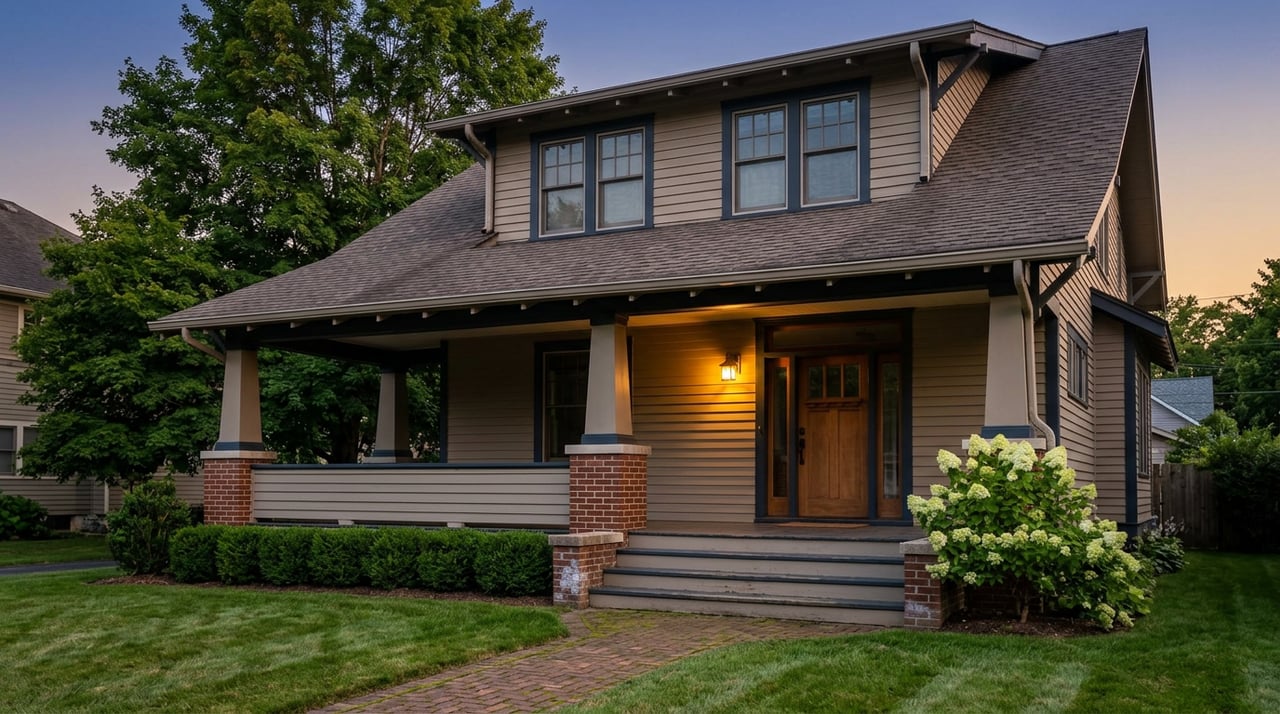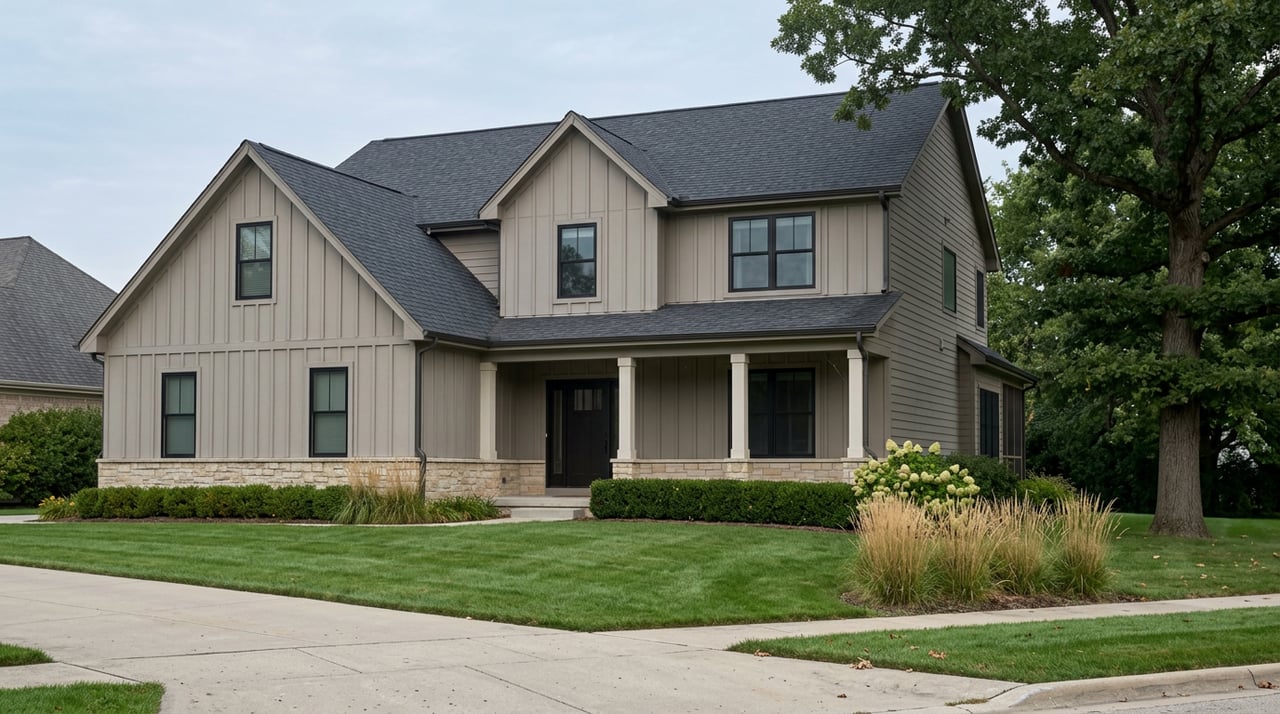
Picture the closing table for a new build in one of Gretna's newer subdivisions. The stack of paperwork is thick. Somewhere near the bottom sits a single page acknowledging the homeowners association, its covenants, and its dues. Most buyers sign it the way they sign the appliance warranty card, quickly, without much thought, because the house is new and everything about it feels new too. The paint is new. The sidewalk is new. Surely the HOA behind it is fine.
That assumption is the problem. In Gretna right now, a brand new HOA is not a safer bet than an old one. It is a harder one to evaluate, and Nebraska law does very little to help a buyer see what is actually behind that acknowledgment page.
What Nebraska disclosure law does not cover
Nebraska has no statute requiring a homeowners association to commission a reserve study or to maintain a minimum reserve balance. There is no state mandate spelling out how an HOA must fund long term repairs, and there is no requirement that an association disclose its reserve health to a buyer during resale. The standard property condition disclosure form that changes hands in most Nebraska transactions was built to cover the physical condition of a house, not the financial condition of the association that governs it.
That gap matters more in a fast growing subdivision than in an established one. An HOA that has been collecting dues for fifteen years has a paper trail: reserve contributions, prior special assessments, years of annual budgets that either held up or didn't. A buyer can look at that record and get a real read on whether the board manages money well. An HOA that has existed for two years has none of that. Its board may still be developer controlled. Its reserve account may hold whatever the developer decided to seed it with at formation, which is not the same thing as an amount calculated against the eventual cost of repaving a private street or replacing a clubhouse roof.
Nebraska law does give homeowners the right to request an association's financial records and governing documents once they are a member, under the state's Nonprofit Corporation Act. But that right only helps a buyer who knows to use it before closing, not after. Nothing compels the seller or the association to hand over that packet automatically the way some other states require.
Why "brand new" is not the same as "low risk"
Gretna is the fastest growing city in Nebraska by population, and state estimates show it nearly doubled in size between 2020 and 2024. Almost every subdivision built to house that growth, places like Harvest Creek, Sterling Chase, Lincoln Ridge, and Skyline Ranches, has an HOA that is only a few years old at most. Some are still selling their first phase of lots.
That pace changes what an HOA actually is in Gretna compared to an older Omaha suburb. A new subdivision's association often starts life with a developer-appointed board, a CC&R document written by the developer's attorney rather than negotiated by residents, and a dues schedule set before a single winter of snow removal or a single season of irrigation repair has tested whether that number was realistic. Amenity-heavy communities carry the sharpest version of this risk. Bellbrook, at 192nd and Harrison, offers residents a 6,000 square foot clubhouse with a 24-hour workout facility and swimming pools for adults and children. Those are wonderful amenities and they are also large future capital expenses. A clubhouse roof, pool resurfacing, and HVAC replacement do not care whether the HOA that owns them is two years old or twenty. The bill still comes due, and a two year old association simply has not had time to prove it is saving enough to cover it.
The complication most buyers never think to ask about
There is a second layer to this that goes beyond any single subdivision's own finances, and it comes from a real Nebraska Supreme Court case involving a neighborhood near Gretna. In a 2021 legal analysis, the Omaha law firm Erickson & Sederstrom detailed a dispute between two adjoining associations, Equestrian Ridge Homeowners Association and Equestrian Ridge Estates II Homeowners Association, over who was responsible for maintaining a shared street. The obligation traced back to a 2004 agreement between the original developers of both tracts, an agreement made years before either homeowners association existed and long before any of the eventual homeowners bought a lot. The Nebraska Supreme Court ruled that the newer association was bound by that original agreement because it stood as a legal successor to the developer who signed it, and because the covenant was written to run with the land permanently.
The practical lesson for a Gretna buyer is not that this exact scenario will repeat itself. It is that reading your own subdivision's CC&Rs is not always sufficient. Cost sharing obligations for shared infrastructure, private roads, retention ponds, and entrance features can be inherited from agreements between developers that predate your association and that your board did not negotiate. In a city adding new phases and new adjoining subdivisions as quickly as Gretna is, that is not a hypothetical concern. It is exactly the kind of question worth asking a listing agent or a title company directly.
What to actually request before closing
None of this shows up on a standard form, so a buyer has to ask for it directly. Before writing an offer on a home in any Gretna subdivision with an HOA, request the following:
- The recorded Declaration of Covenants, Conditions and Restrictions, along with any amendments
- The current operating budget and the most recent financial statement
- A reserve study, if one exists, and if none exists, an explanation of how the reserve amount was set
- Board meeting minutes from the past twelve to twenty four months
- Any special assessment that has been approved but not yet billed, since that obligation typically passes to the buyer at closing unless the purchase contract says otherwise
- Confirmation of whether the board is still developer controlled or has transitioned to resident control
- Whether the association has any cost sharing agreement with a neighboring subdivision for shared roads or infrastructure
An association that cannot produce clean answers to those questions is telling you something, even without a reserve study to back it up. So is one that produces them without hesitation. Either way, you learn more from asking than from trusting the acknowledgment page to have covered it.
A note on financing
There is a lending angle worth knowing too. Associations with no reserve study and thin reserves can end up on a lender's ineligible list, which limits the pool of future buyers to cash purchasers only. That is not an immediate problem for someone buying with a mortgage today, but it is a resale problem worth understanding if you plan to sell in five or ten years. A subdivision's HOA health today shapes who can buy from you later.
Quick answers
Does Nebraska require HOAs to have a reserve study? No. There is no state statute requiring a reserve study or a minimum reserve balance. Associations set their own policy, which is why asking directly matters more in Nebraska than in states with a reserve study mandate.
Can a buyer back out after finding a problem in the HOA documents? That depends entirely on how the purchase contract is written, including any due diligence or HOA document review period. Building that review into your contract timeline before you go under a hard deadline is the practical move, and a real estate attorney can help structure that language.
What happens if I buy into an HOA with unpaid dues from a previous owner? Nebraska law allows an HOA to place a lien on a property for unpaid assessments, and that lien follows the property. Confirming the seller's account is current before closing, and asking the title company to address it directly in the closing documents, is standard practice for exactly this reason.
If you are looking at a new build in Gretna, the house is the easy part to evaluate. The association behind it takes a little more digging, and that digging is worth doing before you sign anything at the closing table, not after. Randy Ralston works Gretna and the surrounding communities regularly and can walk through a specific subdivision's HOA documents with you before you write an offer. Let's Connect.