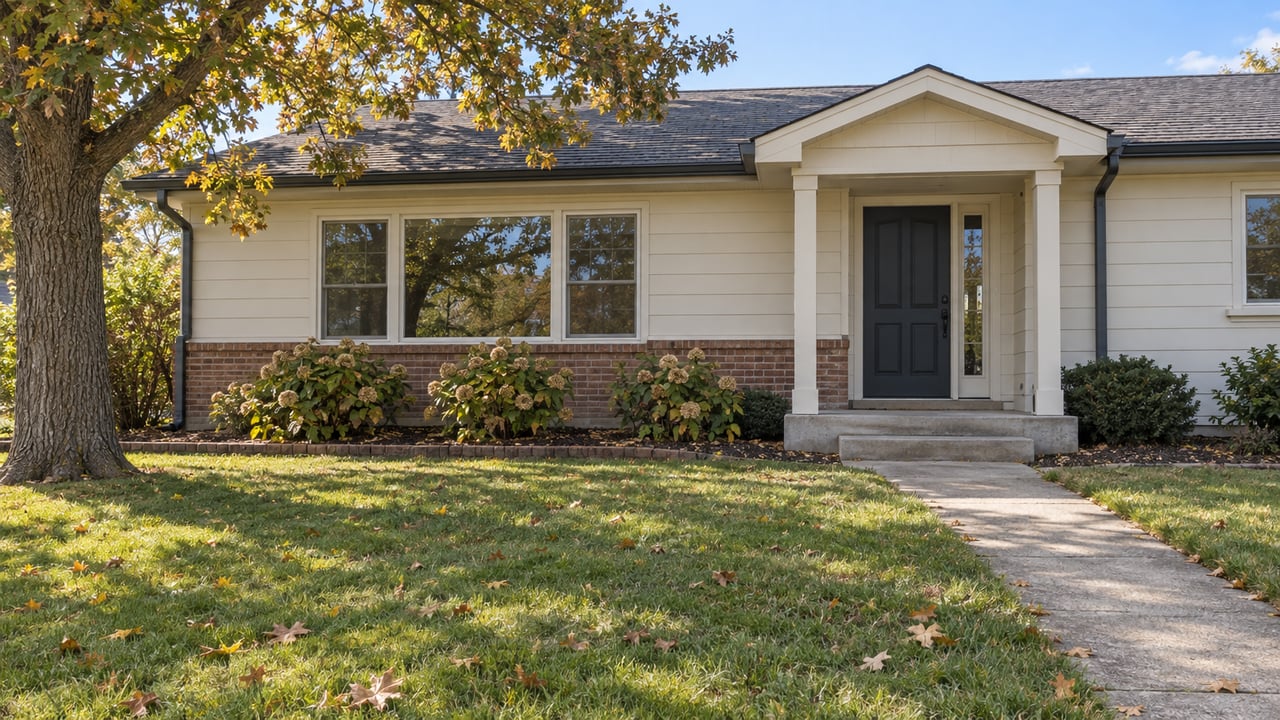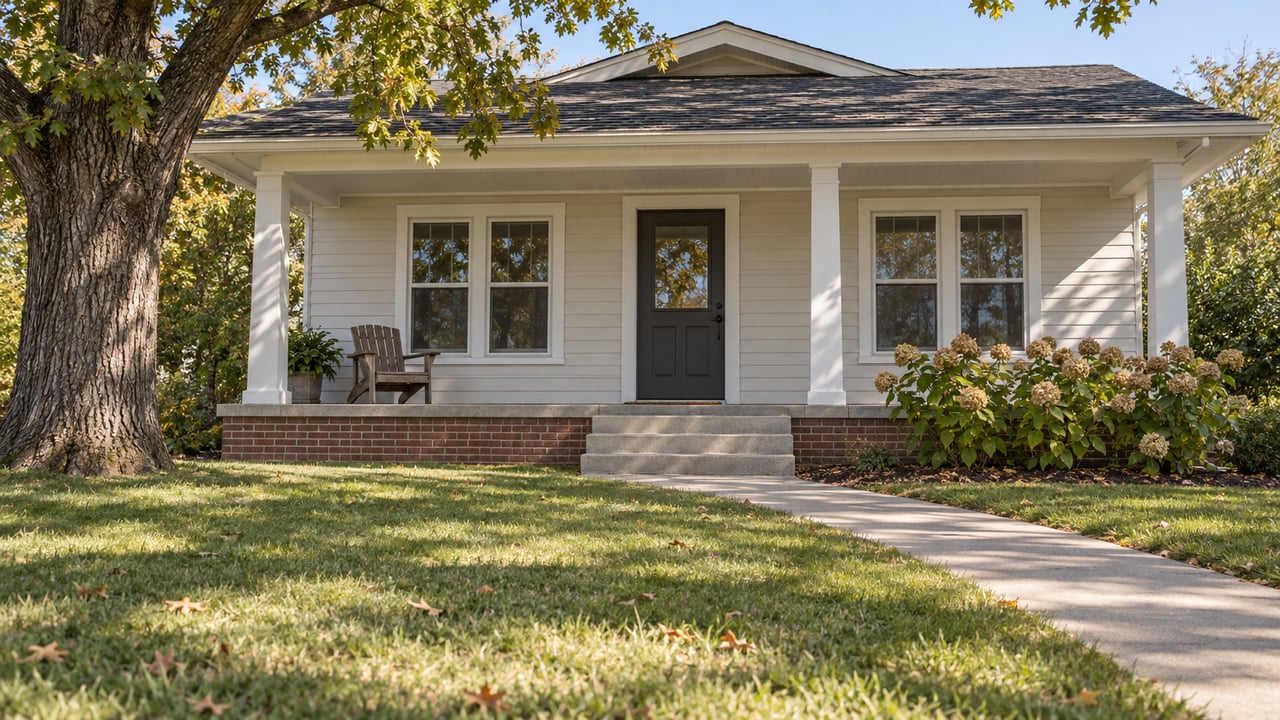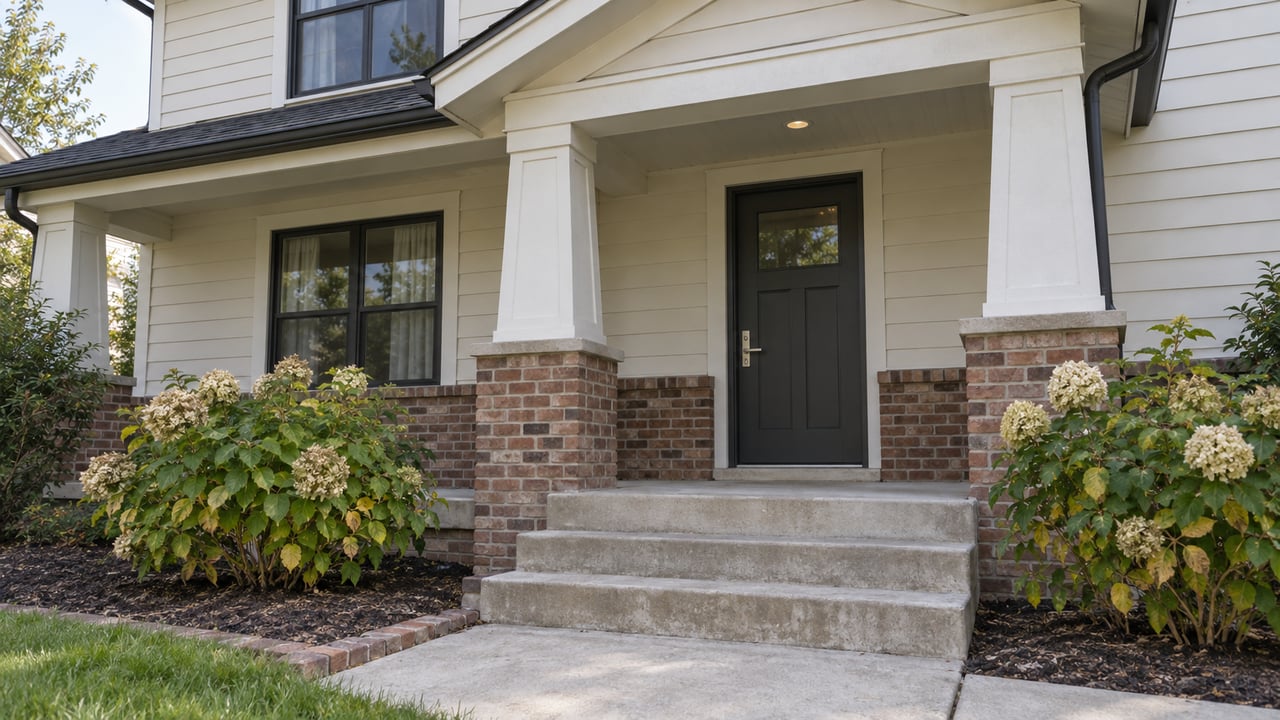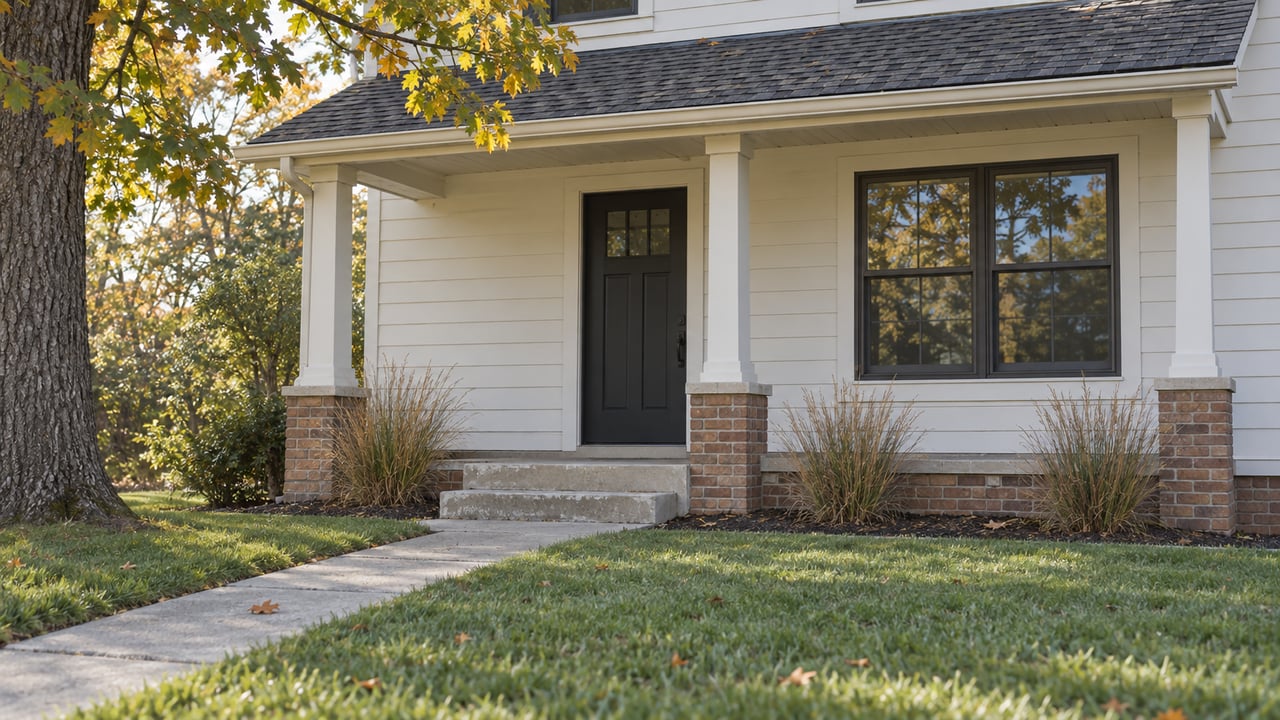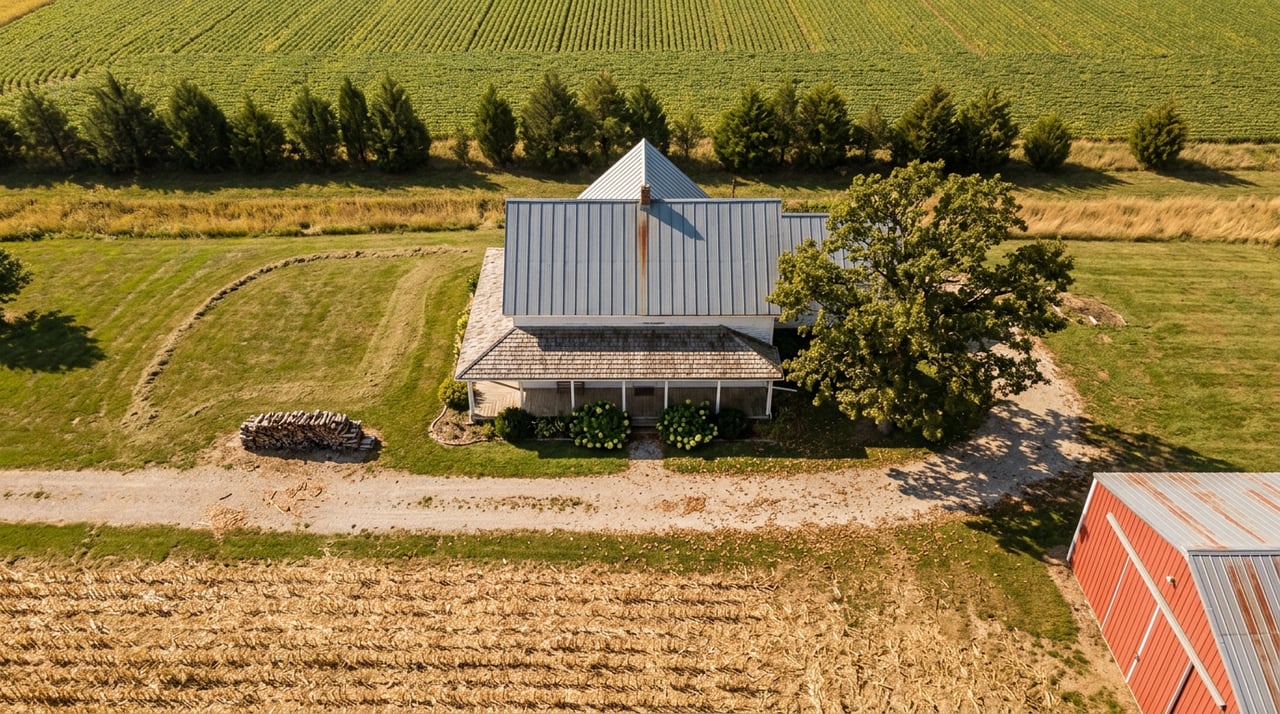
Search "Denton NE home prices" this week and you will get an answer that swings by nearly $400,000 depending on which site loads first. One data provider puts the median sale in the low $250,000s. Another puts it north of $650,000. Neither is wrong. They are counting two different places that happen to share a name and a mailbox stamp.
If you are comparing Lincoln-area communities and Denton keeps showing up with numbers that contradict each other, the fix is not to average them or pick the one that sounds more trustworthy. The fix is to understand that "Denton" on a real estate portal almost never means the town you would actually drive through.
A Village of 188, a ZIP Code of Something Else Entirely
The incorporated Village of Denton is small in the way a lot of Lancaster County towns are small. It covers about 0.14 square miles, and its population sits around 188 residents as of this year, essentially unchanged from the 187 counted in the 2020 Census. It has a Board of Trustees, a Clerk/Treasurer's office with posted hours, and a Zoning Commissioner, Charlotte TeBrink, who fields questions about maps and permits for anyone building or subdividing inside village limits.
ZIP code 68339, the code every listing site attaches to "Denton," is a different animal. It spans 44.787 square miles, according to zip-codes.com, and reaches into Saline and Seward counties in addition to Lancaster. The 2020 Census counted 1,645 people living inside that boundary across 579 households. The Denton post office itself, per Lancaster County's own description, serves 346 rural route addresses and 70 box numbers scattered across that same stretch of countryside.
Do the arithmetic and the picture gets clearer. The ZIP code holds roughly nine times the population of the village but covers well over 300 times the land area. That is not a typo. It means the overwhelming majority of "Denton" by land is farmland, acreage tracts, and rural route addresses that have never been inside a platted street grid. The village itself is a handful of blocks. The ZIP code is a rural mailing zone that happens to use the village's name because that is where the post office sits.
What the Portals Actually Measured
Once you separate the village from the ZIP code, the conflicting numbers stop looking like an error and start looking like two different sample sets.
| Source | Figure Reported | What It's Likely Counting |
|---|---|---|
| RealtyTrac | Median sale price of $257,628, based on only 6 sales in the trailing twelve months | The thin, actual in-village housing stock |
| Redfin | Median sale price of $659K in March 2026, down 5.9% year over year | ZIP-wide sales, weighted by rural acreage properties |
| Movoto | Median list price of $641K in June 2026 | ZIP-wide active listings, same rural weighting |
A median built on six sales is not a stable number in any market. It moves hard with every transaction, which is exactly what you would expect from a village with a small owner-occupied housing stock. The Redfin and Movoto figures, drawn from the full 44-square-mile ZIP code, get pulled upward by acreage properties with large lots, outbuildings, and custom-built homes on the county roads outside town. Both sets of numbers are accurate. They are just describing different real estate.
If you are cross-shopping Denton against another small Lancaster County community, this matters. A median quoted for a place with an actual town boundary is not directly comparable to a median quoted for a 45-square-mile mailing zone that happens to share a ZIP code with a village of under 200 people.
The Land Outside Town Isn't a Bargain
Given how much of ZIP 68339 is farmland, it is worth asking whether that acreage trades at a discount to the rest of the county. It does not appear to.
Listings for land near Denton currently average about $50,826 per acre, based on roughly 149 acres of active inventory. Lancaster County as a whole averages $52,362 per acre across its listed land. Those two figures sit close enough together that Denton's countryside is pricing in line with the county, not below it. Proximity to Lincoln, decent road access, and the ongoing draw of acreage living near a growing metro appear to matter more than which ZIP code a parcel happens to fall inside.
A specific example makes the point concrete. One listing currently on the market is a 24.73-acre hilltop tract about 1.5 miles south of SW 98th Street and West Denton Road, marketed for its elevated view over the surrounding farmland. Another tract sits along West Denton Road itself, offered as a single farm parcel or split into two separate lots, roughly three miles east of the village and four miles west of Lincoln off Highway 77. Neither of these properties is inside the village. Both carry the Denton address because that is what the ZIP code assigns them, and both are priced as working farmland or building sites, not as a discount alternative to buying closer in.
For a buyer thinking in terms of acreage or a future build site, that is useful information. You are not going to find cut-rate land just because a listing says Denton. You are buying into the same countywide market as everyone shopping Lancaster County acreage, with location and access doing the real pricing work.
What You Actually Get Inside the Platted Village
The flip side of this story is what buying inside the actual village gets you, and it is a genuinely different kind of life than a rural route address five miles out.
The commercial core of Denton is small enough to describe in full. The Denton Daily Double Keno Bar and Grill, a family-owned spot established in 1988, is the town's restaurant and gathering place. The Denton Community Center, built in 1993 at 7115 Lancaster Avenue, is the other anchor. It rents out for weddings, reunions, and business meetings, and the surrounding Denton Community Park rounds out the village's recreation with a lighted ball field, tennis and basketball courts, a playground, and horseshoe pits.
The Denton Community Historical Society keeps the village's civic calendar running with monthly programs held the fourth Tuesday of each month at the Community Center, snack included. Recent fall lineups have paired a program on local school history with one on veterans and closed the year with a Thanksgiving potluck that doubles as the group's annual election meeting.
That is village life in Denton: a few blocks, one restaurant, one community building, and a historical society that still meets monthly. It is a genuinely different proposition than owning 25 acres of pasture five miles down a county road that shares the same ZIP code and the same name on the deed.
Questions Worth Asking Before You Trust Any Small-Town Median
Denton is not unique in this respect, but its ratio of village size to ZIP code size makes the gap unusually visible. Before you weigh a median price for any small Lancaster County town against another, it is worth asking:
- Is the address inside the platted village or on a rural route outside it?
- Does the listing reference a numbered street, or a county road and section line?
- How many sales actually back up the median you are looking at, and over what window?
- Is the number a list price or a closed sale price, and how recent is it?
None of these questions require special access. They just require reading past the headline figure to the fine print most portals bury a few clicks down.
Two Things Worth Asking Directly
Does this ZIP-versus-village gap happen elsewhere in Lancaster County? To some degree, yes. Rural ZIP codes across the county are drawn for mail delivery, not political boundaries, so most small incorporated towns sit inside a ZIP that extends well past their actual limits. Denton's gap is simply more extreme, since its village footprint is so small relative to the postal territory built around it.
If I want the walkable village, how do I make sure that's what I'm buying? Confirm the address falls within the Village of Denton's own limits before you fall in love with a listing photo. The village's zoning office can tell you directly whether a given parcel sits inside the platted town or out on a county road that only shares its ZIP code.
Whether you are looking at a starter home inside a small Lancaster County village or twenty acres to build on down the road, the number on the listing site is only the beginning of the conversation. If you want help figuring out which Denton, or which version of any nearby town, actually fits what you are trying to do, Randy Ralston knows this part of Nebraska well enough to tell the difference. Let's Connect.